Introduction
Choosing Custom Home Materials and Finishes requires balancing durability, appearance, maintenance, budget, performance, climate, availability, architectural style, and long-term value.
The best choices should look right today, perform well in real conditions, and continue supporting the way you use your home for years.
Author: Tigo Builders
Last Updated: October 8, 2026
Material selection is one of the most visible parts of building a Custom Home.
However, appearance is only one factor.
Every material also brings requirements related to installation, maintenance, compatibility, scheduling, and cost.
Therefore, successful selections begin with understanding how the home will actually be used.
A second home designed for summer entertaining may have different priorities from a primary residence occupied throughout the year.
The architectural style matters as well.
Materials should support the character of the home instead of feeling like separate showroom selections assembled without a common direction.
What Should You Consider When Choosing Materials for a Custom Home?
Start with architecture, lifestyle, durability, maintenance, climate, budget, installation requirements, and long-term performance.
Each material should make sense as part of the complete home.
Consider these questions:
- Where will the material be used?
- How much traffic will it receive?
- Will it be exposed to moisture?
- How often will maintenance be required?
- Does it fit the architecture?
- Is it currently available?
- How difficult is replacement?
- What does installation require?
Additionally, consider how one material connects with another.
Flooring, cabinetry, countertops, trim, hardware, paint, and lighting should create a coordinated visual language.
Should You Choose Materials Based on Appearance or Durability?
You should consider both.
A beautiful finish that performs poorly in its intended location may create unnecessary maintenance or replacement later.
However, durability alone should not determine every decision.
Custom home design also depends on proportion, texture, color, and architectural character.
The goal is balance.
For example, a highly visible interior finish may justify additional investment because it strongly shapes the room.
Meanwhile, a hidden material may be selected mainly for technical performance.
The best Custom Home Materials and Finishes support both design and everyday use.
How Does Lifestyle Affect Material Selection?
Lifestyle determines how materials will experience wear, moisture, traffic, cleaning, pets, children, guests, and everyday routines.
Therefore, the same finish is not right for every homeowner.
A family that frequently entertains may prioritize durable kitchen surfaces and flooring that handles regular traffic.
A seasonal residence may place greater emphasis on easy maintenance between visits.
Additionally, homeowners who prefer minimal upkeep may evaluate materials differently from those comfortable with periodic refinishing.
Material selection should begin with how you want to live, not simply with what looks attractive in a photograph.
Why Should You Define the Architectural Style First?
Architectural style provides a framework for making hundreds of finish decisions feel connected.
Without that framework, individual selections can compete rather than complement one another.
For example, flooring, millwork, cabinetry, door hardware, and lighting may each be attractive independently.
However, they should still feel appropriate when viewed together.
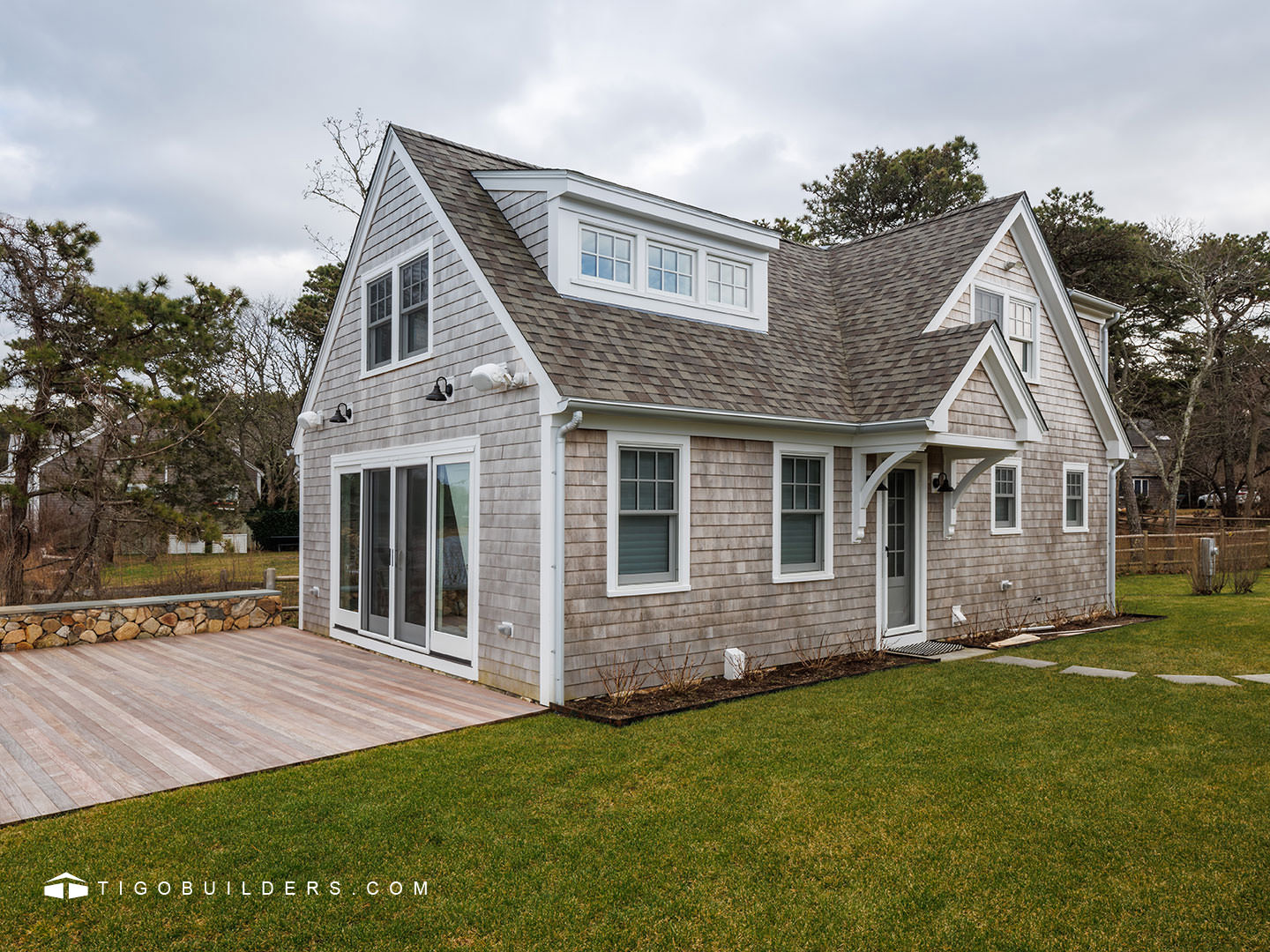
A Cape Cod-inspired home may emphasize timeless proportions, carefully detailed trim, natural textures, and materials that support its architectural character.
The objective is not to make every room identical.
Instead, establish enough consistency that the home feels intentional.
What Makes a Finish Timeless?
A timeless finish supports the architecture rather than depending entirely on a short-term trend.
That does not mean the home must be conservative or lack personality.
Distinctive materials can still feel timeless when they are used intentionally.
For example, expressive lighting or unique tile can add character within a restrained overall palette.
Meanwhile, foundational elements such as flooring, millwork, cabinetry, and major surfaces may benefit from selections with lasting visual compatibility.
Ultimately, timeless design comes from coherence more than from following a specific style label.
Why Should You See Materials Outside a Showroom?
A material can look different depending on lighting, surrounding colors, scale, and installation.
Therefore, showroom impressions should be considered a starting point.
Whenever practical, review samples in the actual project environment.
Natural and artificial light can change how paint, stone, wood, tile, and metal finishes appear.
Likewise, a small sample may not reveal the full variation of a natural material.
For important finishes, larger samples or mockups can provide additional context.
This can help reduce surprises when materials are installed across an entire room.
How Should Climate Influence Material Choices?
Climate should influence exterior materials, windows, doors, roofing, assemblies, and products exposed to moisture or temperature changes.
Performance requirements can vary by location.
ENERGY STAR specifically recommends selecting windows, doors, and skylights according to the climate zone where they will be installed.
The U.S. Department of Energy also notes that climate influences the energy performance of fenestration products.
Therefore, a material that performs well in one region should not automatically be assumed to be the right choice everywhere.
What Should Cape Cod Homeowners Consider About Coastal Exposure?
For coastal homes, material choices should account for the specific exposure and site conditions of the property.
Wind, moisture, corrosion, flooding risk, and salt exposure may affect some locations.
FEMA’s coastal construction guidance highlights corrosion resistance, decay resistance, flood resistance, and durability as considerations when selecting materials for coastal buildings.
However, not every Cape Cod property has identical exposure.
A home in Falmouth may face different site conditions from a property elsewhere in Mashpee, Bourne, Sandwich, or Woods Hole.
Therefore, materials should be evaluated for the actual project rather than selected only because they are commonly associated with coastal architecture.
Why Does Moisture Management Matter?
Moisture can affect materials, finishes, assemblies, and long-term durability.
However, material selection should be considered together with proper detailing and installation.
A durable product cannot compensate for an incorrectly designed or installed assembly.
For example, exterior siding must work with the wall system behind it.
Windows must also integrate correctly with water-management details.
Therefore, homeowners should evaluate both the visible material and how it will be installed.
A Custom Home Builder can help connect finish selections with the construction details needed to support them.
Why Does Maintenance Matter When Selecting Finishes?
Maintenance affects the long-term ownership experience.
Two materials may provide a similar appearance while requiring very different levels of ongoing care.
Ask how often a surface may need cleaning, sealing, painting, refinishing, or other maintenance.
Also consider how easy that maintenance will be once the home is furnished and occupied.
For second-home owners, lower-maintenance choices may be particularly attractive.
However, maintenance should still be balanced with design preferences, performance, and budget.
Understanding the tradeoffs before selecting a material creates more realistic expectations.
How Should Homeowners Think About Long-Term Value?
Long-term value includes more than purchase price.
Installation, maintenance, durability, replacement difficulty, appearance, and expected use all matter.
A less expensive product may require more maintenance.
Meanwhile, a more expensive option may not provide meaningful benefits for the specific application.
Therefore, the goal should not automatically be to buy the most expensive material.
Instead, select materials that offer appropriate value for their role in the home.
Custom Home Materials and Finishes should support both the immediate design and the homeowner’s long-term expectations.
How Should Homeowners Balance Quality and Budget?
Start by identifying which materials have the greatest visual, functional, or long-term importance.
Then prioritize the construction budget accordingly.
Areas that may justify greater investment include:
- Heavily used surfaces
- Difficult-to-replace materials
- Major architectural focal points
- Exterior components
- Permanent built-ins
- Frequently used kitchens and bathrooms
Other areas may provide opportunities to simplify.
For example, a homeowner may prioritize custom cabinetry in the kitchen while selecting a simpler finish in a less prominent secondary space.
Strategic budgeting is more effective than applying the same spending level everywhere.
Does a Higher Price Always Mean a Better Material?
No.
Price can reflect quality, scarcity, fabrication, branding, transportation, customization, or installation complexity.
Therefore, cost alone is not a reliable measure of suitability.
The more useful question is whether the material performs appropriately for the project.
Consider appearance, durability, maintenance, installation, and compatibility.
Additionally, evaluate whether the material provides enough benefit to justify the cost difference.
A Custom Home Builder can help explain construction implications that may not be obvious from the product price alone.
What Interior Materials Should Be Considered Early?
Some interior finishes influence several other design and construction decisions.
These should be discussed early enough to support coordination.
Important categories include:
- Flooring
- Kitchen cabinetry
- Countertops
- Tile
- Plumbing fixtures
- Hardware
- Interior millwork
- Paint
- Lighting finishes
Not every final color needs to be selected at the beginning.
However, major materials can influence dimensions, schedules, fabrication, and adjacent finishes.
Therefore, selection planning should follow the construction timeline.
How Should Flooring Be Evaluated?
Flooring should be evaluated based on appearance, traffic, comfort, maintenance, moisture exposure, installation, and architectural style.
The best option depends on the room and household.
For example, hardwood may support a particular architectural character.
Tile may make sense in another area because of how the room will be used.
Engineered products may also provide options depending on the installation and project requirements.
Rather than choosing one material for its popularity, consider how it will perform in each location.
Detailed flooring comparisons can then focus on the specific needs of the project.
What Should Homeowners Consider About Kitchen Cabinetry?
Cabinetry affects storage, circulation, appliances, lighting, electrical work, plumbing, countertops, and the overall character of a kitchen.
Therefore, it should not be selected in isolation.
Start by defining how the kitchen will function.
Consider cooking, entertaining, storage, appliance locations, and daily routines.
Then evaluate door styles, materials, finishes, hardware, interior organization, and construction quality.
Precise installation is also important.
Even high-quality cabinetry depends on accurate dimensions and coordination with surrounding work.
How Should Countertops Be Evaluated?
Countertops should be evaluated for appearance, durability, maintenance, fabrication, seams, edge details, and expected use.
Different materials involve different tradeoffs.
A homeowner who cooks frequently may have different priorities from someone who primarily uses the kitchen for light seasonal entertaining.
Additionally, the countertop should coordinate with cabinetry, flooring, backsplash, lighting, and hardware.
The final decision should support both the visual composition and daily use of the room.
More detailed material comparisons should be based on the specific project rather than broad assumptions.
Why Should Tile Be Selected as Part of a Larger Palette?
Tile affects color, texture, grout, layout, maintenance, and relationships with adjacent surfaces.
Therefore, it should be considered alongside the rest of the room.
For example, bathroom tile should coordinate with cabinetry, countertops, plumbing fixtures, hardware, and paint.
Scale also matters.
A tile that looks balanced on a sample board may feel different when repeated across a large wall.
Consequently, homeowners should evaluate both individual samples and the overall composition.
The installation pattern may be just as important as the tile itself.
How Should Hardware and Plumbing Finishes Be Coordinated?
Hardware and plumbing finishes should relate to the overall design without requiring every metal in the home to match exactly.
Consistency can come from repetition and intentional relationships.
For example, cabinet hardware, faucets, lighting, and door hardware may share a finish family or complement one another.
However, mixing finishes can also work when done deliberately.
The goal is to avoid accidental inconsistency.
Architects and designers can help create a finish strategy before dozens of individual selections begin.
What Exterior Materials Should Be Evaluated Early?
Exterior selections often affect both architecture and building performance.
Important categories include:
- Siding
- Roofing
- Exterior trim
- Windows
- Exterior doors
- Decking
- Railings
- Outdoor living materials
These materials may also affect procurement and construction sequencing.
Therefore, major exterior products should not be left until late in the project.
A Custom Home Builder can help identify which selections require early decisions because of fabrication, installation, or ordering requirements.
Why Are Windows and Doors Important Material Decisions?
Windows and doors affect architecture, daylight, comfort, energy performance, maintenance, and exterior detailing.
They also influence both interior and exterior finishes.
ENERGY STAR uses climate-specific performance criteria for certified windows, doors, and skylights.
The Department of Energy recommends comparing factors such as frames, glazing, U-factor, and solar heat gain when selecting windows.
However, energy performance is only one consideration.
Cost, aesthetics, structural requirements, water resistance, durability, ventilation, and maintenance may also influence the decision.
Why Should Decking and Outdoor Materials Be Selected Carefully?
Outdoor living materials experience direct exposure to weather and regular use.
Therefore, appearance should be considered alongside maintenance and installation.
Decking options may include natural wood, composite products, and other systems appropriate to the design.
Each option can involve different expectations for care, appearance, cost, and installation.
Railings, stairs, fasteners, and surrounding trim also contribute to the complete assembly.
Tigo Builders works with both wood and composite decking, so selections can be evaluated according to the project rather than a single preferred material.
Which Materials Should Be Selected Early?
Products that require custom fabrication, affect rough construction, or have significant lead times generally deserve earlier attention.
Examples may include:
- Windows
- Exterior doors
- Custom cabinetry
- Specialty millwork
- Certain plumbing fixtures
- Specialty hardware
- Custom fabricated materials
Actual lead times can change.
Therefore, current information should always be confirmed with suppliers and manufacturers.
Early decisions can help prevent procurement from becoming disconnected from the construction schedule.
Why Should Material Availability Be Considered Before Construction?
A design choice creates little value if the product cannot arrive when the project needs it.
Availability should therefore be evaluated during planning.
Some materials may have alternatives that preserve the intended appearance.
Others may be central to the architecture and worth planning around.
The key is identifying those differences early.
Waiting until installation approaches can force rushed substitutions.
A Custom Home Builder can help connect material selections with purchasing and construction sequencing.
How Can Architects, Designers, and Builders Coordinate Finish Selections?
Architects, designers, and builders contribute different expertise to material selection.
Working together helps connect design intent with construction requirements.
The architect or designer can guide proportion, color, texture, and visual relationships.
Meanwhile, the builder can provide information about installation, availability, sequencing, subcontractor requirements, and cost.
Homeowners remain central to the process.
Their lifestyle, priorities, maintenance preferences, and budget should guide the final decisions.
This collaboration is especially useful when a finish choice affects several trades.
How Can a Custom Home Builder Help With Material Selection?
A Custom Home Builder can explain how a material may affect installation, compatibility, cost, sequencing, maintenance, and procurement.
That construction perspective can complement the architect or designer’s work.
For example, two exterior finishes may achieve a similar design goal but require different installation processes.
The builder can explain those differences.
Likewise, custom millwork may require decisions earlier than paint colors because fabrication affects the schedule.
The builder helps connect selections with when and how the home will actually be built.
How Does Tigo Builders Approach Custom Home Materials and Finishes?
Tigo Builders emphasizes thoughtful selection, precise craftsmanship, transparent budgeting, early planning, and clear communication.
The goal is to connect the desired finish with practical construction requirements.
For homes in Falmouth and across Cape Cod, material discussions may also consider coastal exposure, maintenance expectations, seasonal use, and project-specific site conditions.
The same approach applies to projects in Mashpee, Bourne, Sandwich, Woods Hole, and surrounding communities.
However, each property and homeowner has different priorities.
Material selection should therefore begin with the project rather than a preset list of products.
What Should Be Decided Before Comparing Specific Materials?
Before comparing individual products, homeowners should define the architecture, lifestyle, budget priorities, maintenance expectations, and performance needs of the home.
That creates a framework for better decisions.
From there, specific categories can be compared more meaningfully.
Flooring can be evaluated by use and moisture exposure.
Countertops can be compared by maintenance and performance.
Cabinetry can be evaluated by construction, storage, finish, and integration.
Exterior materials can be reviewed for appearance, durability, weather exposure, and maintenance.
Windows and doors can be compared by architectural design, energy performance, materials, and lead times.
Decking can be evaluated across wood and composite options.
The next step is to apply this framework to individual Custom Home Materials and Finishes and determine where durability, timeless design, maintenance, and budget should carry the most weight.
What Flooring Is Best for a Custom Home?
The best flooring depends on lifestyle, traffic, moisture, maintenance preferences, comfort, architectural style, and installation conditions.
There is no single material that works best for every Custom Home.
Hardwood can bring warmth and traditional character to living areas.
Engineered wood may offer another wood-flooring option depending on the installation conditions and product specifications.
Tile can be practical in bathrooms, mudrooms, entries, and other areas where water exposure influences material selection.
However, appearance should not be the only deciding factor.
Homeowners should also consider cleaning, refinishing, replacement, transitions between rooms, and compatibility with the subfloor or heating system.
For Custom Home Materials and Finishes, flooring should connect visually with cabinetry, millwork, paint, stone, and other major interior elements.
How Should You Choose Kitchen Countertops?
Choose countertops by comparing appearance, maintenance, durability, staining concerns, heat exposure, fabrication, seams, edge profiles, and budget.
Different materials offer different advantages and limitations.
Natural stone can provide unique color and pattern variations.
Engineered surfaces may offer a different balance of appearance, consistency, care, and fabrication requirements.
The best selection depends on how the kitchen will actually be used.
A household that cooks frequently may have different priorities from a seasonal homeowner who primarily uses the kitchen for entertaining.
Additionally, countertop thickness and edge details can influence the visual character of cabinetry.
Fabrication should therefore be coordinated with sinks, faucets, appliances, backsplashes, and cabinet dimensions.
A Custom Home Builder can help explain how the final selection affects installation and construction sequencing.
What Should You Consider When Selecting Cabinetry?
Cabinetry should be evaluated for construction quality, storage, finish, hardware, layout, installation precision, and architectural integration.
It should also support how the homeowner uses each room.
Custom cabinetry can provide extensive flexibility in dimensions, details, and organization.
Semi-custom options may also meet project goals depending on the design.
Neither approach should be selected by label alone.
The quality of planning and installation matters greatly.
Cabinetry should coordinate with:
- Appliances
- Plumbing
- Lighting
- Electrical outlets
- Countertops
- Flooring
- Millwork
- Wall dimensions
For example, changing an appliance after cabinetry is designed can affect openings, electrical requirements, panels, clearances, or adjacent storage.
Therefore, early coordination helps protect the finished result.
Why Does Millwork Require Precise Planning?
Millwork can define the architectural character of a Custom Home.
However, successful execution depends on dimensions, proportions, material selection, fabrication, and installation.
Built-ins may need to align with windows, doors, ceilings, fireplaces, flooring, lighting, and electrical devices.
Small inconsistencies can become highly visible.
Therefore, Custom Home Materials and Finishes involving custom millwork should be reviewed before fabrication begins.
Detailed drawings, samples, and coordination can help the architect, builder, fabricator, and homeowner understand the intended result.
How Should Homeowners Choose Tile?
Tile should be selected according to location, appearance, maintenance, installation, slip considerations where relevant, grout, scale, and surrounding finishes.
The tile itself is only one part of the finished assembly.
Grout color and joint width can significantly change its appearance.
Likewise, layout can determine whether a room feels balanced or visually busy.
Homeowners should consider how tile relates to:
- Cabinetry
- Countertops
- Plumbing fixtures
- Hardware
- Paint
- Flooring
- Lighting
Additionally, specialty patterns or materials may require more labor and planning.
Those installation implications should be discussed before the final selection is approved.
What Exterior Siding Options Should Be Considered?
Siding should be evaluated for architectural character, exposure, maintenance, installation requirements, durability, and compatibility with the wall assembly.
Different projects may support different material choices.
Natural wood can provide a traditional appearance.
Manufactured or composite products may offer different maintenance and performance characteristics.
However, no siding should be selected solely because it is marketed as low maintenance.
The product must also fit the architecture and be installed according to its technical requirements.
For a Cape Cod home, exterior selections should respond to both the design and the actual property conditions.
How Do Coastal Conditions Affect Exterior Material Selection?
Coastal conditions can increase exposure to moisture, wind-driven saltwater spray, corrosion, and decay.
The level of exposure varies by property and distance from the coast.
FEMA notes that materials in coastal environments may require special consideration for corrosion, moisture, decay, and weather exposure.
Therefore, a Custom Home in Woods Hole may have different exterior requirements from a more protected site elsewhere on Cape Cod.
Material selection should be based on the actual property.
Proper installation also matters.
Even a durable exterior product depends on correct flashing, fastening, drainage, and integration with surrounding assemblies.
How Should Roofing Be Selected?
Roofing should be evaluated according to architecture, weather exposure, slope, installation requirements, maintenance, durability, and compatibility with the complete roof system.
The roofing material is only the visible layer.
Underlayment, flashing, penetrations, drainage, ventilation, and transitions also influence the performance of the roof assembly.
Therefore, homeowners should evaluate roofing as a system rather than simply choosing a color or texture.
For Custom Home Materials and Finishes, roofing should also complement siding, trim, windows, and other exterior components.
What Should You Look for When Choosing Windows and Doors?
Windows and doors should balance architectural appearance, energy performance, material, glass options, maintenance, installation, exposure, and lead time.
They also affect both interior and exterior design.
ENERGY STAR criteria for windows and skylights vary by climate zone and use independently certified NFRC performance ratings.
The U.S. Department of Energy also recommends considering U-factor and solar heat gain coefficient when comparing energy performance.
However, energy ratings are only part of the decision.
Window proportions, frame profiles, operation, trim relationships, maintenance, and installation details also affect the home.
For Custom Home Materials and Finishes, windows often require early decisions because they influence rough openings, exterior trim, interior millwork, and construction sequencing.
Why Does Window Installation Matter?
A high-quality window still depends on appropriate installation and integration with the building envelope.
Therefore, product selection and construction detailing should be considered together.
Window dimensions can affect framing.
Exterior installation affects flashing and surrounding finishes.
Interior dimensions can affect trim, cabinetry, or built-ins.
Consequently, changing the window package late can create effects well beyond the cost of the windows themselves.
How Do You Choose Decking Materials?
Decking should be compared according to appearance, maintenance, durability, installation, surface characteristics, cost, and long-term care.
Wood and composite products can both be appropriate depending on the project.
Natural wood offers a material character many homeowners value.
However, different wood species and finishes can require different maintenance approaches.
Composite decking, including Trex-style products, provides another option for homeowners seeking different maintenance characteristics.
Yet composite products vary in appearance, installation requirements, pricing, and surface behavior.
Therefore, homeowners should compare specific products rather than assuming every wood or composite deck performs identically.
What Else Should Be Considered When Designing a Deck?
The deck surface is only one element.
Railings, stairs, framing, fasteners, lighting, doors, exterior trim, and connections to the house also influence the finished project.
For coastal properties, exposure should also be evaluated.
FEMA notes that salt-laden coastal environments can accelerate corrosion in susceptible metals.
Therefore, hardware and fastening decisions can be as important as the visible decking.
A Custom Home Builder can help coordinate these components as one complete outdoor living system.
Are Low-Maintenance Materials Worth the Investment?
They can be, but only when they support the homeowner’s goals, architecture, budget, and performance expectations.
Low maintenance does not automatically mean maintenance free.
Ask what care the manufacturer recommends.
Also consider what happens if the product is damaged or eventually needs replacement.
For second-home owners, easier maintenance can be especially valuable when the property is not occupied year-round.
However, that benefit should still be weighed against appearance, installation, price, and architectural suitability.
How Can You Create a Timeless Finish Palette?
Start with the architecture and build a consistent foundation of materials, colors, textures, and finishes.
Then add personality through selected details.
Timeless does not mean every finish must be neutral.
It means the materials should feel intentional within the architecture rather than chosen only because they are currently popular.
For example, distinctive tile or lighting can provide character.
Meanwhile, flooring, cabinetry, millwork, and major surfaces can establish visual continuity.
Custom Home Materials and Finishes should work together rather than compete for attention.
Can Different Metal Finishes Be Mixed?
Yes.
Different metal finishes can work together when the combination is intentional and repeated with purpose.
For example, cabinet hardware may differ from lighting while still belonging to a coordinated palette.
The important point is consistency.
Randomly changing finishes from room to room can make the home feel disconnected.
A designer can help establish rules for where each finish appears.
This reduces uncertainty when selecting faucets, lighting, door hardware, cabinet hardware, and accessories.
How Should Materials Be Prioritized Within the Budget?
Prioritize areas based on use, visibility, replacement difficulty, weather exposure, and architectural importance.
Not every material needs the highest available price point.
Consider investing strategically in:
- Heavily used surfaces
- Difficult-to-replace components
- Exterior weather-exposed materials
- Permanent cabinetry
- Architectural focal points
- Major windows and doors
Meanwhile, secondary areas may offer opportunities for simplification.
For example, a homeowner might invest more in the main kitchen while using simpler materials in a secondary utility space.
The goal is to allocate the material budget intentionally.
Why Should Installation Cost Be Part of Material Selection?
The purchase price does not represent the complete installed cost.
Some materials require more preparation, fabrication, labor, equipment, or specialty expertise.
For example, an intricate tile pattern may require more installation time than a simpler layout.
Large fabricated pieces may require special handling.
Therefore, material comparisons should include installation implications.
A Custom Home Builder can help homeowners understand these differences before selections are finalized.
Which Materials Should Be Ordered Early?
Products that require custom fabrication or affect other construction work often deserve early attention.
Examples may include:
- Windows
- Exterior doors
- Custom cabinetry
- Specialty hardware
- Custom millwork
- Specialty tile
- Custom fabricated materials
Actual lead times can change.
Therefore, suppliers and manufacturers should confirm current availability before the schedule relies on an assumed delivery date.
Procurement decisions should be connected to the project timeline.
Why Can Late Material Decisions Create Problems?
Late selections can affect ordering, fabrication, subcontractor scheduling, and adjacent construction.
They may also force rushed substitutions.
For example, changing cabinetry late may affect countertops, appliances, lighting, electrical work, and plumbing.
Therefore, selection deadlines should be established during planning.
Not every finish needs to be finalized immediately.
However, the project team should understand when each decision becomes necessary.
What Are the Most Common Mistakes When Choosing Custom Home Materials and Finishes?
The most common mistakes occur when materials are chosen independently from lifestyle, architecture, construction requirements, and schedule.
Avoid these problems:
- Choosing only by appearance
- Ignoring maintenance
- Selecting materials independently
- Forgetting installation costs
- Following trends that conflict with the architecture
- Ignoring availability
- Waiting too long to decide
- Using unrealistic allowances
- Ignoring climate
- Making excessive last-minute changes
Custom Home Materials and Finishes should be planned as a coordinated system.
That approach creates stronger relationships between design, construction, budget, and long-term ownership.
Why Are Unrealistic Material Allowances a Problem?
An allowance should reasonably reflect the level of material the design expects.
If it does not, the preliminary construction budget can become misleading.
For example, a luxury kitchen design paired with an allowance based on very different finish expectations may create a budget gap later.
Therefore, homeowners should understand which selections remain allowances and what those amounts are intended to cover.
Transparent budgeting allows material decisions to be evaluated before they become construction surprises.
What Should You Check Before Finalizing Custom Home Materials and Finishes?
Before approving major selections, review the following:
- Architectural style
- Lifestyle
- Durability
- Maintenance
- Budget
- Installation cost
- Climate suitability
- Material compatibility
- Lead times
- Availability
- Warranty information
- Color and finish coordination
- Samples
- Quality expectations
- Long-term replacement needs
- Builder input
- Architect or designer input
This checklist creates a practical final review.
However, important materials should still be evaluated in the context of the complete project rather than as isolated products.
How Can Tigo Builders Support Material and Finish Decisions?
Tigo Builders can provide practical construction input on installation, sequencing, availability, budget implications, and compatibility between selections.
That input complements the architect and designer’s work.
For projects in Falmouth, Mashpee, Bourne, Sandwich, Woods Hole, and other Cape Cod communities, project-specific exposure and seasonal use can also influence material priorities.
Tigo Builders emphasizes thoughtful material selection, precise craftsmanship, transparent budgeting, and proactive communication throughout construction planning.
Frequently Asked Questions About Custom Home Materials and Finishes
When Should Materials Be Selected for a Custom Home?
Selections should follow the construction schedule.
Windows, exterior doors, cabinetry, custom millwork, and other fabricated products often require earlier decisions than paint colors or decorative finishes.
How Do I Choose Between Style and Durability?
Look for a balance that fits the location and use of the material.
Highly visible finishes should support the design, while heavily used or exposed surfaces should also meet practical performance expectations.
What Custom Home Materials Require the Most Maintenance?
Maintenance varies by specific product, finish, exposure, and installation.
Review manufacturer guidance rather than assuming that an entire material category has one maintenance requirement.
Should My Builder Help Choose Materials?
Yes, from a construction perspective.
A Custom Home Builder can explain installation, sequencing, compatibility, availability, and cost implications while architects and designers guide aesthetic decisions.
Which Materials Should Be Ordered First?
Custom or long-lead items often need early attention.
Windows, doors, cabinetry, millwork, specialty hardware, and fabricated products are common examples, but current lead times should always be verified.
How Can I Keep Material Selections Within Budget?
Establish priorities early, use realistic allowances, compare installed costs, and track upgrades as selections are made.
Spend strategically where durability, visibility, or replacement difficulty matters most.
What Materials Work Well for Cape Cod Homes?
There is no universal list.
The right materials depend on architectural style, exposure, property conditions, maintenance preferences, and budget.
Coastal durability should be evaluated where exposure makes it relevant.
Conclusion: How Should You Choose Custom Home Materials and Finishes?
The best Custom Home Materials and Finishes balance design, durability, maintenance, performance, budget, climate, availability, craftsmanship, and long-term value.
Good material selection is not about purchasing the most expensive products.
It is about choosing materials that make sense for the architecture, lifestyle, location, and expectations of the homeowner.
Interior finishes should work together as a coordinated palette.
Exterior materials should respond to both design and actual site conditions.
Additionally, homeowners should consider how materials will be installed, maintained, repaired, and eventually replaced.
Climate and exposure also matter.
For coastal properties, FEMA guidance highlights moisture, corrosion, decay, salt exposure, and other environmental considerations that may affect material selection.
For windows and doors, energy performance should be evaluated using climate-appropriate ratings and product information.
Ultimately, Custom Home Materials and Finishes should support the way the home looks, feels, functions, and performs over time.
A Custom Home Builder can connect those design decisions with installation, procurement, budgeting, scheduling, and construction requirements.
That collaboration helps transform individual samples and selections into a cohesive finished home.
Contact Tigo Builders Today… to discuss Custom Home Materials and Finishes, design coordination, durability, budget, lead times, installation, and construction planning for your Custom Home project.