Introduction
Balancing Custom Home Design and Budget requires early planning, clear priorities, realistic budgeting, builder involvement, architect-builder collaboration, thoughtful material selection, value engineering, scope control, cost transparency, and protection of construction quality.
Author: Tigo Builders
Last Updated: October 28, 2026
A Custom Home should reflect the homeowner’s lifestyle and architectural vision.
However, every design decision also has a construction impact.
Materials, labor, engineering, fabrication, installation, and scheduling can all influence the final cost.
Therefore, design and budget should develop together rather than becoming separate conversations.
How Can You Balance Design and Budget in a Custom Home?
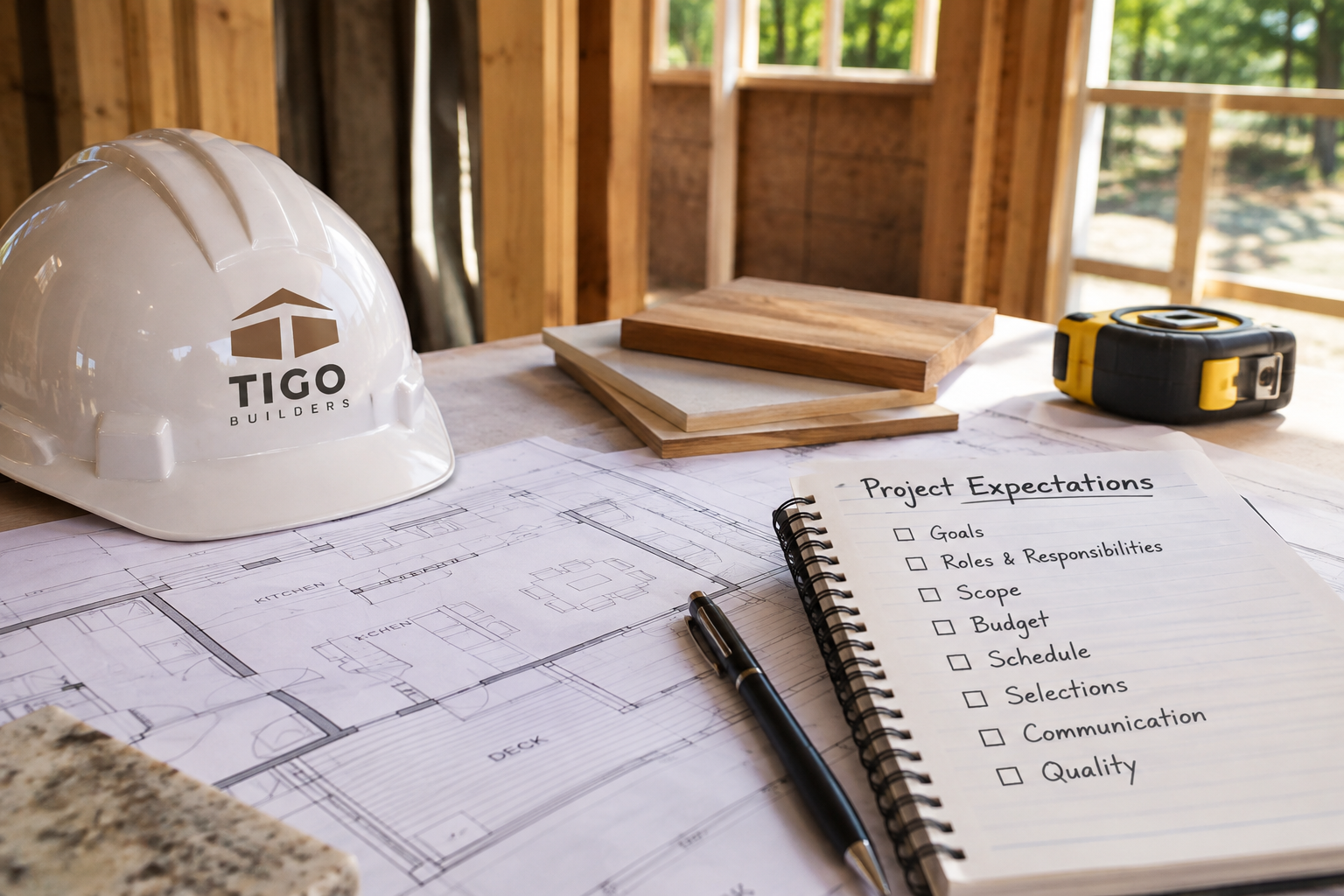
Start by deciding which parts of the design matter most.
Then build a realistic budget around those priorities.
The goal is not to make every decision cheaper.
Instead, Custom Home Design and Budget planning helps direct money toward the features that create the greatest value for the homeowner.
Less important areas may allow simplification.
Important architectural features can then receive greater protection.
Why Should Budget Conversations Start Early?
Early budget discussions create more flexibility.
When cost feedback arrives while the design is still developing, the architect and homeowner can evaluate alternatives without undoing months of work.
A budget problem discovered late can require significant redesign.
It may also affect material selections, engineering, procurement, and scheduling.
Therefore, the earlier the financial framework is understood, the easier it is to make intentional decisions.
Should Design or Budget Come First?
Neither should develop completely independently.
The homeowner needs a design vision.
However, that vision should be evaluated against a realistic construction budget as the project develops.
The strongest process creates feedback between both sides.
Design decisions inform pricing.
Pricing then helps the team determine where additional design refinement may be needed.
What Design Features Should Be Prioritized?
Priorities should reflect how the homeowner plans to live in the finished home.
They should also consider which architectural features define the character of the project.
Potential priorities may include:
- Kitchen
- Primary living spaces
- Exterior architecture
- Windows and doors
- Custom millwork
- Outdoor living
- Primary suite
- Natural light
- Energy performance
- Timeless materials
Not every homeowner will prioritize the same features.
That is one of the advantages of a Custom Home.
Why Do Priorities Make Budget Decisions Easier?
Priorities provide a framework when the project requires choices.
Without them, every feature may appear equally important.
For example, a homeowner may strongly value detailed millwork in the main living areas.
If the budget needs adjustment, secondary spaces may offer opportunities for simplification instead.
That strategy protects the design features that matter most.
How Can a Custom Home Builder Help Protect the Budget?
A Custom Home Builder can provide practical information about the construction consequences of design decisions.
That input may involve:
- Labor
- Materials
- Sequencing
- Constructability
- Procurement
- Specialty trades
- Cost drivers
- Scheduling
- Installation complexity
The builder can explain why one detail may require more labor or coordination than another.
The architect can then determine whether an alternative still protects design intent.
Why Should the Builder Become Involved During Design?
Early builder involvement allows construction knowledge to inform the design before major decisions become difficult to change.
In May 2026, AIA and AGC released a framework supporting early contractor engagement, clear roles, open communication, and stronger cost certainty during design.
This does not mean the builder should replace the architect.
Instead, each professional contributes different expertise.
The architect develops and protects the design.
The builder contributes information about how that design may be built, priced, sequenced, and procured.
Why Should Architects and Builders Collaborate Early?
Architect-builder collaboration can help the team distinguish between meaningful architectural value and expensive complexity.
Some details deserve protection.
Others may be simplified without changing the overall experience of the home.
For example, a custom exterior detail may be central to the architectural identity.
Another hidden assembly may have several possible construction approaches.
Early discussion helps the team understand the difference.
How Can Collaboration Reduce Late Redesign?
Late redesign often happens when the project reaches a level of detail that reveals budget or construction conflicts.
Early collaboration can identify some of those concerns sooner.
The AIA-AGC framework specifically emphasizes contractor engagement during design to improve constructability and cost certainty.
That approach gives the project team more time to compare alternatives.
It also allows homeowners to make informed decisions before construction begins.
What Are the Biggest Design-Related Cost Drivers?
Cost drivers vary by project.
However, complexity often influences labor, engineering, fabrication, materials, and coordination.
Potential examples include:
- Large openings
- Complex rooflines
- Custom windows
- Specialty millwork
- Custom cabinetry
- Structural complexity
- Premium materials
- Specialty fabrication
- Complex tile layouts
- Outdoor living spaces
These features are not automatically problems.
Many may be central to the architecture.
The important step is understanding their impact before committing to them.
How Can Structural Complexity Affect the Budget?
Structural design can influence engineering, framing, materials, equipment, and labor.
Large openings or unusual forms may require specialized solutions.
That does not mean those features should be removed.
However, the team should understand their construction implications.
Custom Home Design and Budget decisions become easier when architectural value and construction complexity are evaluated together.
Can Complex Rooflines Affect Construction Costs?
They can.
A roof with multiple intersections, unusual forms, or detailed exterior relationships may require additional framing, materials, flashing coordination, and finish work.
The value of that complexity depends on the design.
If it strongly defines the home, the homeowner may choose to preserve it.
If it adds little architectural value, the team may consider a simpler approach.
How Can Custom Windows Influence Design and Budget?
Windows can strongly affect both architecture and building performance.
Size, configuration, material, glazing, operation, and customization can all affect cost.
The U.S. Department of Energy recommends evaluating window characteristics such as frame materials, glazing, U-factor, and solar heat gain when selecting products.
Therefore, window selection should not be based only on purchase price.
Appearance, energy performance, durability, maintenance, and architectural importance also matter.
How Does Material Selection Affect the Construction Budget?
Material selection affects more than the price of the product.
It can also influence installation, fabrication, labor, maintenance, delivery, and scheduling.
When comparing materials, consider:
- Appearance
- Durability
- Installed cost
- Maintenance
- Availability
- Lead time
- Replacement difficulty
- Architectural importance
The best material is not automatically the most expensive option.
Likewise, the least expensive product may not provide the strongest value.
What Is Installed Cost?
Installed cost considers the material and what is required to put it into the finished home.
A lower-priced material may require additional preparation or labor.
Another product may cost more but install more efficiently.
Therefore, material price alone can provide an incomplete comparison.
Custom Home Design and Budget planning should consider the complete construction impact whenever practical.
Why Should Maintenance Be Considered in Material Decisions?
A material may fit the initial budget but require more maintenance over time.
Another option may cost more initially but better match the homeowner’s lifestyle.
This can be particularly important for second-home owners.
They may prefer materials that reduce recurring maintenance demands when they are away from the property.
However, the correct choice depends on the specific home and owner priorities.
How Can Energy Performance Affect Design Decisions?
Energy-related choices can influence windows, doors, insulation, mechanical systems, and other building components.
They may also interact with comfort, architecture, and budget.
For windows, DOE guidance notes that climate, U-factor, solar heat gain, durability, maintenance, aesthetics, and cost can all be relevant selection factors.
Therefore, energy performance should be considered alongside design rather than treated as a completely separate goal.
What Is the Difference Between Reducing Cost and Reducing Quality?
Reducing cost means finding a more efficient way to use the available budget.
Reducing quality means compromising something important to performance, durability, installation, or craftsmanship.
The two are not the same.
For example, simplifying decorative millwork in a secondary room may reduce cost.
Reducing important waterproofing or required structural work would be a very different decision.
Good Custom Home Design and Budget planning looks for savings that do not undermine essential quality.
What Is Value Engineering?
Value engineering compares alternative ways to achieve a project goal while using the available budget more effectively.
It is not simply a process of making the project cheaper.
A value-engineering discussion may compare:
- Cost
- Design importance
- Appearance
- Durability
- Labor
- Installation
- Maintenance
- Availability
- Lead time
The objective is to preserve the project’s most important goals while reducing unnecessary expense or complexity.
How Can Value Engineering Protect Design Intent?
Value engineering works best when the architect, builder, and homeowner understand which details are essential.
That knowledge helps the team avoid cutting features that define the project.
For example, a custom stair may be an important architectural focal point.
The team may protect that investment while simplifying less visible details elsewhere.
This keeps budget reductions focused rather than random.
Does Value Engineering Mean Using Cheaper Materials?
Not necessarily.
Sometimes the best solution involves a different material.
In other situations, the material remains the same while installation or design complexity is adjusted.
Value engineering can also involve:
- Simplifying fabrication
- Reducing unnecessary detailing
- Revising dimensions
- Coordinating trades differently
- Selecting a more available product
- Prioritizing high-impact features
The best solution depends on the project.
Why Should the Budget Be Reviewed During Design?
Design becomes more detailed over time.
Therefore, the construction budget should also become more detailed.
An early estimate may rely on assumptions.
Later reviews can incorporate actual selections, quantities, design details, and trade input.
Regular budget reviews help identify misalignment before it becomes difficult to correct.
They also give the homeowner a clearer view of how individual decisions affect the overall project.
How Can Preliminary Estimates Help?
A preliminary estimate gives the project team an early financial reference.
It does not necessarily represent the final construction price.
However, it can identify major cost areas.
The estimate may help the team understand whether the current design direction is reasonably aligned with the target budget.
As more information becomes available, assumptions can be replaced with more specific pricing.
Why Should Assumptions Be Visible?
An estimate is easier to understand when the homeowner knows which items are confirmed and which are still assumptions.
For example, cabinetry may not yet be fully designed.
Tile may still be represented by an allowance.
A specialty exterior detail may require additional pricing.
When these items are visible, the homeowner can better understand how much certainty exists in the current budget.
How Can Scope Clarity Prevent Budget Problems?
Scope clarity helps homeowners understand what the proposed construction price actually includes.
Without it, two budgets may appear comparable even when they cover different work.
Homeowners should understand:
- What is included
- What is excluded
- What remains an allowance
- What is not yet selected
- What requires specialty pricing
- What assumptions were used
The National Association of Home Builders recommends written estimates and detailed contracts that clearly identify what work will and will not be performed.
That same principle is valuable during Custom Home Design and Budget planning.
Why Are Allowances Important?
Allowances provide budget amounts for products or work that have not yet been fully selected or priced.
They can be useful during design.
However, an allowance should reflect the expected quality level of the home.
A low allowance can make an early budget look attractive.
Later, the actual selections may exceed it significantly.
Therefore, homeowners should understand what each allowance is expected to cover.
Why Should Exclusions Be Reviewed?
Exclusions identify items not included in the proposed scope.
They can significantly affect the real project cost.
For example, a budget may exclude certain landscaping, specialty systems, owner-supplied items, or other work.
The specific exclusions vary by project.
Therefore, comparing Custom Home budgets requires looking beyond the final total.
NAHB guidance also emphasizes reviewing written scope and what will or will not be performed before construction begins.
How Can Site Conditions Affect Custom Home Design and Budget?
Site conditions can influence foundations, access, utilities, drainage, staging, equipment, deliveries, and other project requirements.
Every property is different.
A Custom Home in Falmouth may have different conditions from one in Mashpee, Bourne, Sandwich, or Woods Hole.
Therefore, broad assumptions should not replace project-specific evaluation.
How Can Existing Structures Affect the Budget?
When Custom Home work includes an addition, renovation, or connection to an existing structure, hidden conditions may affect planning.
Some information becomes available only after investigation or demolition.
Existing framing, utilities, foundations, or previous alterations may influence the project.
Early evaluation can reduce uncertainty.
However, it cannot identify every hidden condition in advance.
Why Can Seasonal Goals Influence Design and Budget Decisions?
Second-home owners may have a preferred period when they want to use the property.
That goal can influence design decisions, procurement, material selections, and scheduling.
However, seasonal completion should be based on realistic project conditions.
Tigo Builders emphasizes early planning and realistic scheduling rather than unsupported completion promises.
For Cape Cod projects, that coordination can become an important part of pre-construction planning.
How Does Tigo Builders Approach Custom Home Design and Budget?
Tigo Builders emphasizes transparent budgeting, early planning, precise craftsmanship, clear communication, realistic scheduling, and collaboration with architects and homeowners.
The goal is to understand both the architectural priorities and the construction implications behind them.
That includes evaluating materials, labor, sequencing, procurement, and cost drivers before they become urgent field decisions.
Custom Home Design and Budget should remain connected throughout design development.
The strongest projects do not treat cost control as a final exercise after the architecture is complete.
Instead, the homeowner, architect, and builder continue comparing priorities with real construction information as the project develops.
Once that foundation is established, the next step is deciding where additional investment creates the most value and where thoughtful simplification may protect the budget.
Those decisions lead directly into deeper value engineering, material substitutions, allowances, long-lead products, change management, and quality control.
They also determine whether the final Custom Home Design and Budget remain aligned when construction begins.
Where Should Homeowners Spend More in a Custom Home?
Additional investment often makes sense where design, durability, daily use, performance, or craftsmanship has greater importance.
However, priorities vary from one homeowner to another.
A successful Custom Home Design and Budget strategy identifies those priorities before deciding where to spend more.
Potential areas may include:
- Important cabinetry
- Windows and doors
- Exterior materials
- Main living areas
- Custom millwork
- Key architectural details
The goal is not to choose premium options everywhere.
Instead, invest where quality or design creates meaningful value for the specific project.
Should the Kitchen Receive a Larger Share of the Budget?
It may, particularly when the kitchen is central to daily life and entertaining.
However, that decision depends on the homeowner.
Cabinetry, appliances, countertops, lighting, and millwork can make the kitchen a significant cost category.
Clear priorities help determine which features deserve greater investment.
When Is Custom Millwork Worth the Investment?
Custom millwork may be worth protecting when it plays an important role in the architectural character of a room.
For example, a living room feature wall may help define the entire interior.
Meanwhile, detailed millwork in a secondary room may be less important to the homeowner.
That distinction creates opportunities to balance Custom Home Design and Budget more intentionally.
Where Can Homeowners Simplify Without Compromising Quality?
Simplification can work well in areas that have less architectural importance or where complexity adds little functional value.
Possible areas may include:
- Secondary rooms
- Decorative details
- Hidden complexity
- Duplicate features
- Selected fixtures
- Less visible finishes
- Overly complicated details
Simplification should always be intentional.
It should not compromise structural requirements, waterproofing, safety, required performance, or quality-critical installation.
Can Secondary Rooms Use Simpler Finishes?
Yes.
A guest bedroom, laundry room, or secondary bathroom may not require the same finish level as a primary living area.
That does not mean the space should feel poorly built.
Instead, homeowners can select durable, appropriate materials with less custom detailing.
The savings can then support higher-priority spaces.
Can Construction Complexity Be Reduced Without Changing the Design?
Sometimes.
A detail may have several possible ways to achieve a similar architectural effect.
The builder can explain the labor and construction implications of each option.
Meanwhile, the architect can determine whether a simpler approach still protects design intent.
This is one of the most useful applications of value engineering.
How Can Value Engineering Protect Design Intent?
Good value engineering identifies ways to use the available construction budget more effectively without automatically sacrificing the design.
Alternatives can be compared based on:
- Cost
- Design importance
- Appearance
- Performance
- Durability
- Installation
- Labor
- Maintenance
- Availability
- Lead time
The team should first understand why a feature matters.
Only then should it consider replacing, simplifying, or redesigning it.
What Is a Practical Example of Value Engineering?
Imagine a detailed wall treatment that requires extensive custom fabrication.
The team may explore a simpler construction method that preserves the proportions and visual effect.
If the architectural result remains strong, the alternative may reduce unnecessary labor.
However, if simplification changes the character of the room, preserving the original detail may provide greater value.
Can Value Engineering Change Materials?
Yes.
Material alternatives may be part of value engineering when they support the project’s design and performance goals.
However, a substitution should not be judged only by purchase price.
A different material may affect installation, dimensions, maintenance, durability, or surrounding details.
Therefore, the complete construction impact should be considered.
How Can Material Substitutions Reduce Costs?
A substitution may reduce costs when another product offers suitable design, performance, and durability with a better total installed cost.
Potential factors include:
- Appearance
- Dimensions
- Quality
- Durability
- Compatibility
- Installation
- Maintenance
- Cost
- Availability
- Lead time
The lowest-priced product is not always the best choice.
Likewise, a more expensive option does not automatically provide greater value.
Why Do Material Dimensions Matter?
Two products that look similar may have different thicknesses, sizes, or installation requirements.
Those differences may affect surrounding construction.
For example, changing tile thickness may alter transitions.
Changing a countertop material may affect edge details or fabrication.
Therefore, substitutions should be coordinated rather than treated as isolated purchasing decisions.
How Can Allowances Affect the Budget?
Allowances represent estimated amounts for items that have not yet been fully selected or priced.
They can help the project move forward before every finish is finalized.
However, unrealistic allowances can make the initial budget look lower than the likely finished project.
Common allowance categories may include:
- Tile
- Lighting
- Plumbing fixtures
- Appliances
- Countertops
- Flooring
- Hardware
The allowance should reflect the expected quality level of the home.
How Should Homeowners Evaluate an Allowance?
Ask what type of product the allowance is intended to support.
Then compare that assumption with your actual expectations.
For example, a homeowner expecting highly customized lighting should understand whether the lighting allowance supports that level of design.
If not, Custom Home Design and Budget expectations should be adjusted before construction progresses.
Why Can Low Allowances Create Budget Surprises?
A low allowance does not reduce the actual price of the products the homeowner eventually chooses.
It only lowers the amount represented in the initial budget.
If final selections exceed the allowance, the difference may increase the project cost.
Transparent allowances create a more useful financial picture.
How Do Long-Lead Items Influence Design and Cost?
Some products require significant time for selection, approval, fabrication, or delivery.
Potential examples include:
- Windows
- Exterior doors
- Cabinetry
- Custom millwork
- Specialty hardware
- Fabricated components
- Specialty finishes
Actual lead times should always be confirmed with current suppliers.
Late decisions may reduce available choices or create pressure to consider alternative products.
Can Procurement Affect Custom Home Design and Budget?
Yes.
Procurement connects design decisions with actual availability, price, fabrication, and scheduling.
A product may fit the design and budget but not the required timeline.
Another product may be available sooner but require design adjustments.
Therefore, procurement should be considered while major material decisions are still being developed.
Why Should Windows and Doors Be Considered Carefully?
Windows and doors can influence architecture, performance, maintenance, and budget.
Their selection should consider more than appearance.
The U.S. Department of Energy notes that window performance varies by climate and highlights factors such as U-factor and solar heat gain coefficient.
Therefore, product decisions should balance architectural goals with appropriate performance and construction requirements.
How Can Late Design Changes Affect the Budget?
Late changes may affect work that has already been designed, ordered, fabricated, scheduled, or installed.
That can increase both cost and complexity.
A design change may influence:
- Labor
- Materials
- Procurement
- Completed work
- Subcontractor sequencing
- Schedule
The later the change occurs, the more project relationships may need to be reconsidered.
Should Homeowners Avoid All Design Changes?
No.
A Custom Home is personal, and some changes may improve the finished result.
However, the homeowner should understand the impact before approving a significant revision.
Whenever practical, review the design, budget, procurement, and schedule consequences together.
An informed change is easier to manage than an impulsive one.
How Do Change Orders Affect Custom Home Design and Budget?
Change orders document approved changes to the project.
They may increase or reduce cost and may also affect the schedule.
Changes may result from:
- Owner requests
- Design revisions
- Material substitutions
- Unexpected conditions
- Added scope
The specific financial responsibility depends on the contract and circumstances.
This article does not provide legal advice about responsibility for individual costs.
Why Should Changes Be Reviewed Before Work Proceeds?
A seemingly simple change may affect multiple trades.
For example, changing cabinetry may influence electrical work, plumbing, appliances, countertops, lighting, and finishes.
Therefore, the immediate cost of the requested item may not represent its complete construction impact.
Reviewing the broader effect helps protect Custom Home Design and Budget alignment.
How Can the Team Protect Quality While Reducing Cost?
Cost reductions should focus on unnecessary complexity rather than essential building quality.
Required structural work, proper installation, waterproofing, inspections, and applicable code requirements should remain protected.
Massachusetts currently uses the Tenth Edition of the Massachusetts State Building Code, 780 CMR.
The specific requirements depend on the project and applicable local provisions.
Therefore, cost-control decisions should not be made by treating required construction as optional.
Why Is Proper Installation Worth Protecting?
Even a high-quality product can fail to deliver the intended result when installation is poor.
Therefore, material cost and labor quality should be evaluated together.
This is particularly important for custom details where several materials or trades interact.
Precise craftsmanship often depends on preparation completed earlier in the project.
Why Should Quality Control Continue Throughout Construction?
Quality control can identify issues before later work makes them more difficult to correct.
It should not begin only during the final punch list.
Potential checkpoints may involve dimensions, material transitions, finish details, and other project-specific conditions.
Required inspections also create formal construction checkpoints.
For example, Falmouth lists inspections for applicable foundation, rough trade, framing, insulation, and final stages.
What Mistakes Can Disrupt the Balance Between Design and Budget?
Several common decisions can push the project away from its original financial and architectural goals.
These include:
- Setting the budget too late: Major design decisions may already be difficult to revise.
- Prioritizing every feature equally: The project lacks a clear hierarchy for spending.
- Involving the builder too late: Construction feedback arrives after design decisions are advanced.
- Ignoring installed cost: Product price does not show the full construction impact.
- Using unrealistic allowances: The initial budget may underrepresent expected selections.
- Making late material decisions: Procurement and schedule options may become limited.
- Changing the design frequently: Multiple trades and completed work may be affected.
- Comparing builders only by price: Scope and assumptions may differ significantly.
- Cutting essential quality: Short-term savings may compromise important performance.
- Ignoring procurement: Desired materials may not align with the project timeline.
- Failing to track upgrades: Small upgrades can accumulate into a large budget change.
- Weak communication: Homeowners may discover financial impacts later than expected.
Avoiding these mistakes requires ongoing communication rather than one budget conversation at the beginning.
What Should You Review to Balance Custom Home Design and Budget?
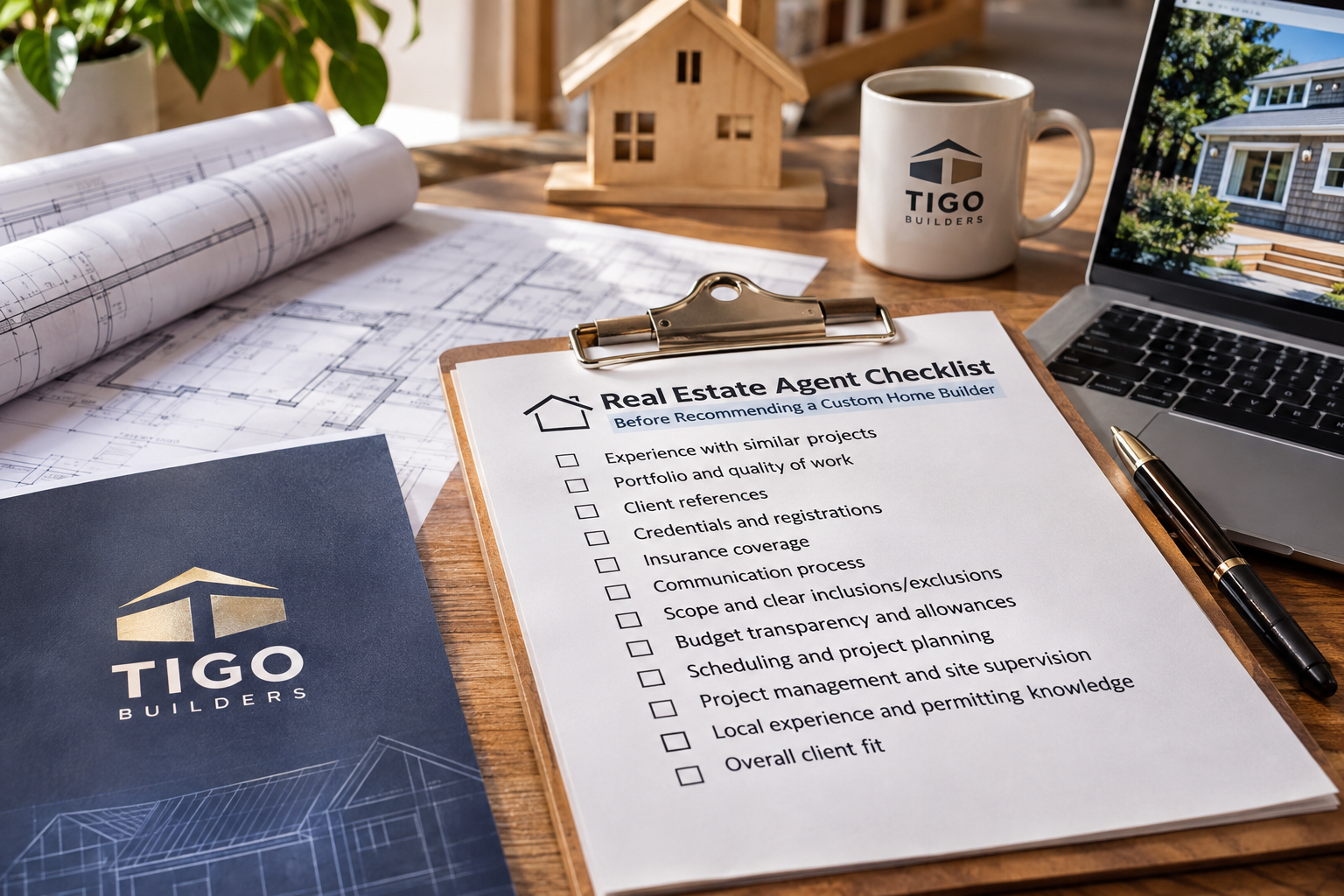
Use this checklist throughout design and pre-construction:
- Project priorities
- Target budget
- Project scope
- Construction drawings
- Builder involvement
- Design priorities
- Major cost drivers
- Allowances
- Exclusions
- Material selections
- Installed costs
- Long-lead items
- Value engineering
- Material substitutions
- Owner upgrades
- Change orders
- Schedule impacts
- Quality expectations
- Final budget alignment
- Final design alignment
The checklist should be revisited as the design becomes more detailed.
Custom Home Design and Budget alignment is an ongoing process rather than a single approval.
How Should the Final Design and Budget Be Reviewed Together?
Before construction moves forward, the team should compare the developed design with the latest budget and known project assumptions.
Major materials, allowances, exclusions, custom details, and procurement risks should be visible.
Homeowners should understand which decisions are final and which remain open.
The architect should understand whether budget changes have affected important design priorities.
The builder should understand the scope being priced and built.
This shared understanding reduces the risk that each party begins construction with a different expectation.
How Does Tigo Builders Approach Design and Budget Alignment?
Tigo Builders emphasizes transparent budgeting, early collaboration, realistic scheduling, clear communication, precise craftsmanship, and detailed project management.
The goal is to connect architectural priorities with real construction information.
That includes materials, labor, procurement, sequencing, specialty trades, and installation complexity.
For Cape Cod projects in Falmouth and surrounding areas, each property is evaluated according to its actual design, site conditions, goals, and construction requirements.
Projects in Mashpee, Bourne, Sandwich, or Woods Hole may have different conditions and priorities.
Therefore, Custom Home Design and Budget planning should remain project-specific.
Frequently Asked Questions About Custom Home Design and Budget
How Do You Balance Design and Budget in a Custom Home?
Define the most important architectural and lifestyle priorities first.
Then develop the budget alongside the design, using builder input, material coordination, realistic allowances, and value engineering to guide decisions.
Should Design or Budget Come First?
They should develop together.
The design establishes the vision, while the budget provides a realistic financial framework.
Regular feedback between both helps prevent major late-stage corrections.
Can Value Engineering Reduce Quality?
It should not when done correctly.
Good value engineering reduces unnecessary cost or complexity while protecting important design, performance, durability, and craftsmanship goals.
Where Should I Spend More in a Custom Home?
Consider investing more in areas that strongly affect daily use, durability, architectural character, or replacement difficulty.
The correct priorities vary by homeowner and project.
How Can Material Choices Affect the Budget?
Materials influence purchase price, installation, labor, fabrication, maintenance, procurement, and schedule.
Therefore, homeowners should evaluate total installed impact rather than product price alone.
Why Should a Builder Be Involved During Design?
The builder can provide information about construction cost, materials, labor, constructability, procurement, sequencing, and specialty trades.
Early input provides more flexibility for informed decisions.
How Often Should the Budget Be Reviewed?
The budget should be reviewed when meaningful design, scope, material, or pricing information changes.
Regular checkpoints during design can help keep expectations aligned before construction begins.
Conclusion: Can Great Design and a Realistic Budget Work Together?
Yes.
Balancing Custom Home Design and Budget does not require sacrificing the features that make a home personal and architecturally meaningful.
The strongest process begins with clear priorities.
Early budgeting creates a realistic financial framework while the design still has flexibility.
Builder involvement connects architecture with real construction costs, materials, procurement, labor, and scheduling.
Architect-builder collaboration helps protect design intent while evaluating practical alternatives.
Scope clarity makes the budget easier to understand.
Thoughtful material coordination helps homeowners compare appearance, durability, installed cost, maintenance, and availability.
Value engineering provides a structured way to reduce unnecessary complexity while protecting important architectural goals.
Realistic allowances also reduce the risk of later budget surprises.
Change management helps the team understand how revisions may affect cost and schedule.
Quality control ensures that budget decisions do not undermine essential construction or craftsmanship.
Ultimately, the best strategy is not to spend as little as possible.
It is to spend intentionally.
Some features deserve additional investment because they define the architecture, improve daily use, support durability, or are difficult to replace later.
Other areas may allow thoughtful simplification without weakening the overall home.
A Custom Home Builder can help connect these choices with construction methods, materials, labor, procurement, scheduling, and craftsmanship.
That relationship helps keep Custom Home Design and Budget aligned from early planning through construction.
Contact Tigo Builders Today… to discuss how to balance Custom Home Design and Budget through architectural planning, clear project priorities, transparent budgeting, value engineering, material selection, realistic scheduling, precise craftsmanship, and coordinated construction execution.